
Read Lawrence County's Owner Card
The Lawrence County Assessor keeps a current-owner record card for every township parcel. The card is linked through GIS. Treat the card as a snapshot. It carries a date. Copy the parcel number, owner name, situs address, assessment year, and any sales or split note before moving on. Land, improvement, and total assessed values confirm the right parcel is open. But they do not prove title.
| Owner display | The name attached to the dated assessor record |
|---|---|
| Parcel or tax ID | The cross-system key for GIS, assessment, and tax records |
| Situs address | The physical site, if assigned and shown |
| Mailing name and address | The tax-notice destination, not proof of occupancy |
| Sales clue | A date or amount to test against a recorded deed |
| Assessment date | The year controlling the displayed value and name context |
The card can lag behind a fresh transfer. Lawrence County states that the prior January 1 owner stays the owner of record for that tax cycle. Neither screen is wrong.
Check Lawrence County GIS Now
Lawrence County GIS answers a search by address, owner name, or tax ID. Select the parcel point. Then open the scanned-card link the Assessor describes. Save the record date and the exact parcel punctuation. The map also layers sales, land use, soil IDs, and surrounding owners, checks that the selection fits the intended tract. The Assessor office page identifies the property-card and GIS route.
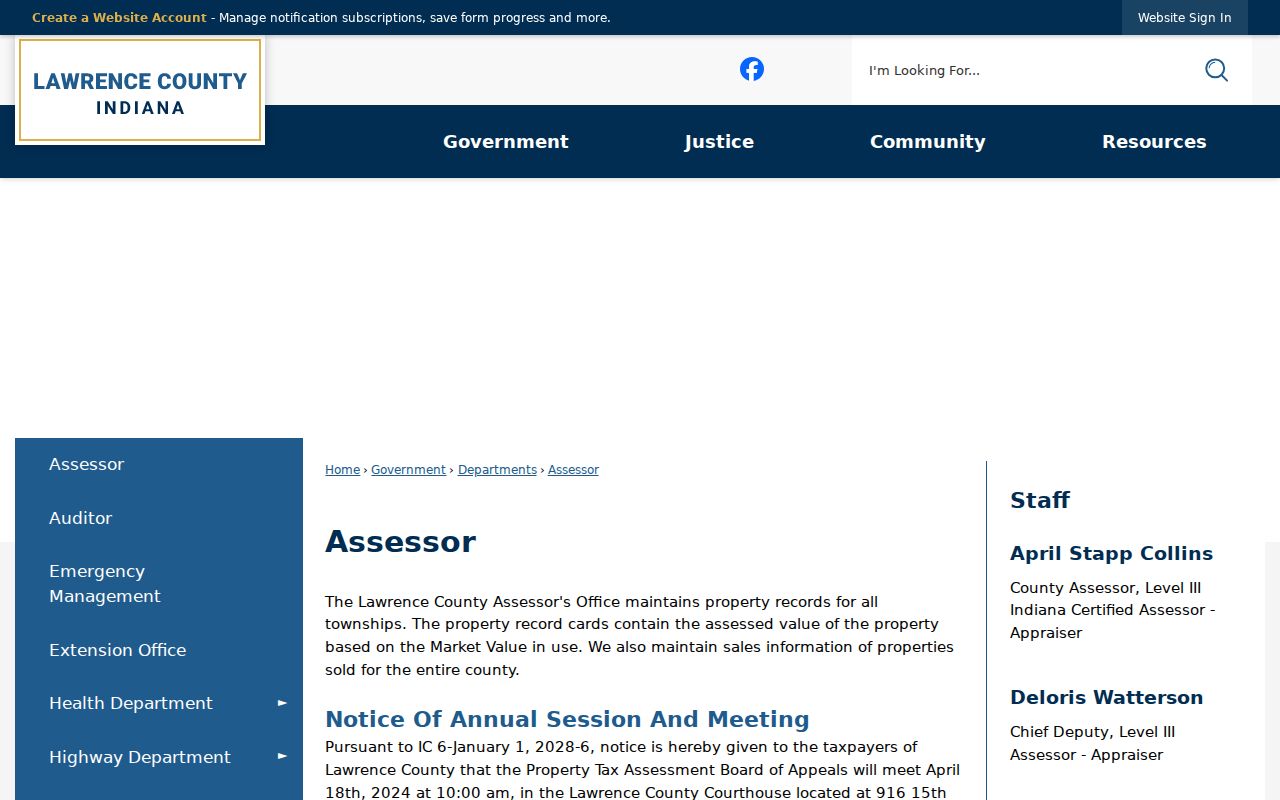
The office page points to the official source. The live parcel card supplies the dated current-owner field that still needs verifying before it settles anything.
Verify Lawrence County Ownership
The assessor's owner field is only a lead. The deed is the last word. The latest recorded deed for the same legal description shows how the interest was vested, so match lot and block, addition, section-township-range, or metes-and-bounds wording rather than trusting the address alone.
- Copy the owner, parcel number, legal description, and card date from GIS.
- Search the name in Doxpop recorded documents and locate the newest conveyance affecting that tract.
- Record the grantee, grantor, date, instrument number, book/page, and image status.
- Check whether a later correction, quitclaim, tax deed, or other conveyance changes the answer.
A fresh sale may beat the card. The newest recorded deed is often more current, and the Lawrence County owner-finding route explains the broader address-to-owner method.
Define Lawrence County Owner Fields
These terms describe the record itself, not title law.
- Owner of record
- The party named by a specific office’s current dated record.
- Vesting
- How a deed places an interest in one or more names.
- Grantee
- The recipient named in a deed.
- Registered agent
- A public contact designated in an entity filing.
- Situs
- The parcel’s physical location, distinct from the mailing address.
A trust or company can be the grantee without the parcel card listing each person behind it. Never rewrite an entity name into a person's name.
Check Lawrence County Entity Owners
When the newest deed names an LLC, take it to the Indiana business database. Do the same for a corporation. Search by business name, business ID, filing number, registered agent, or governing person. Contains, starts-with, and exact-name modes are offered. The filing can show status, filing dates, addresses, and a registered agent. That agent identifies the legal entity and a public contact. It does not settle ownership. It never replaces the deed. A listed person may not own the real estate. The recorded deed still governs the parcel. Trust and estate records may require the recorded instrument. A public court file may serve instead. Sealed and protected-record limits still apply.
Recent Lawrence County Owner Changes
Records can disagree. When deed, card, and tax list conflict, preserve each source along with its date. A new sale, parcel split, combination, corrected legal description, trust transfer, or estate deed often explains the mismatch. The Treasurer advises a last-name search covering the prior two years whenever parcel numbers change. Ask the Auditor or Assessor for a split sheet.
The county tax list accepts district, parcel number, name, tax year, and property address. It carries a "Not for Official Use" label. Use it for the billing trail. It never overrules a deed. The January 1 rule matters here. It can leave the former owner attached to the current bill cycle even after a conveyance records.
Note: A mailing address is useful for tax contact, but it is neither the property situs nor proof that the owner lives there.
Request a Current Lawrence County Record
A dead end online is not the end of the search. Ask the Assessor, Room 25, 916 15th Street, Bedford, or 812-275-5405, for the existing parcel card. Ask the Recorder, Room 21 or 812-275-4139, for the named deed. Recorder staff searches run by name. Bring name variants, an estimated date, and the parcel's legal description. Office copies run one dollar per page.
Under Indiana APRA, IC 5-14-3, describe the existing record with reasonable particularity, request electronic delivery where maintained, and ask for an estimate before copy costs accrue. The office may redact protected fields. A denial should identify its statutory ground.
Contact Lawrence County Owners Lawfully
The public tax mailing address is the right first contact for a boundary question, purchase inquiry, estate matter, or deed-fraud concern. It does not reveal occupancy. Indiana's Address Confidentiality Program can substitute a safe address for a protected person. Never press county staff for the hidden address. And remember the limits. A current-owner check is not a title search, and it settles no liens, easements, boundaries, or competing interests. Get a title professional or attorney for legal reliance.
Lawful use. Use Lawrence County owner-of-record data for legitimate property matters, never to stalk, watch, harass, intimidate, or harm anyone.
Date Lawrence County Owner Evidence
Every current owner conclusion needs an "as of" date. Write down the effective year on the assessor card. Note the tax year on the Treasurer result, the recording time of the latest deed, and the date you searched GIS. Why does this matter? A later tax update can still show the former January 1 owner, while a newer deed has already vested title in someone else. That gap trips up careless researchers in Lawrence County all the time.
Use Lawrence County Office Records
The four offices hold different pieces of the record. The Assessor explains the card and value year. The Auditor prepares tax duplicates and ownership plats. The Treasurer can clarify the tax account plus the prior-January-1 rule. For the conveyance itself, the Recorder supplies the deed that names the grantee. Ask one narrow question tied to a parcel. Recorder staff search by name only, so give them the exact spelling plus variants. This chain of offices is the fallback when a portal is down, an image is gated, or a recent instrument has not reached another system yet. A recent instrument may not have reached another system yet, and this chain of offices is the fallback.
Frame a Lawrence County Owner Request
A good request names the record instead of asking staff to decide who owns land. Ask for the property record card for a stated parcel and assessment year. Request the Auditor ownership plat or split sheet for that parcel. Or cite a Recorder instrument by party and date. Indiana APRA does not require an agency to create a new report. It also does not have to answer a research question.
For a deed image, include the owner spelling from GIS. Give a narrow recording range. Add any book/page or instrument clue too. Ask about electronic delivery if the record is kept that way. Request a cost estimate first. State guidance sets a 24-hour response for in-person or telephone requests. Mail, email, or fax gets seven calendar days. Response does not always mean immediate production. If part of a record is withheld, ask for the statutory basis. Request a partial release of nonexempt material. These steps preserve your access to Lawrence County records. You never ask staff to reveal a protected address or confidential record.